Beyond Transparency
A tangible shopping prototype for ethical reflection at the point of choice
Leon Junge is an MA Interaction Design student at the Zurich University of the Arts whose thesis explores ethical consumption through tangible and critical design.
His prototype asks a simple but important question: what would happen if ethical preferences became part of the shopping act itself, rather than being buried in labels, reports, or hard-to-find background information?
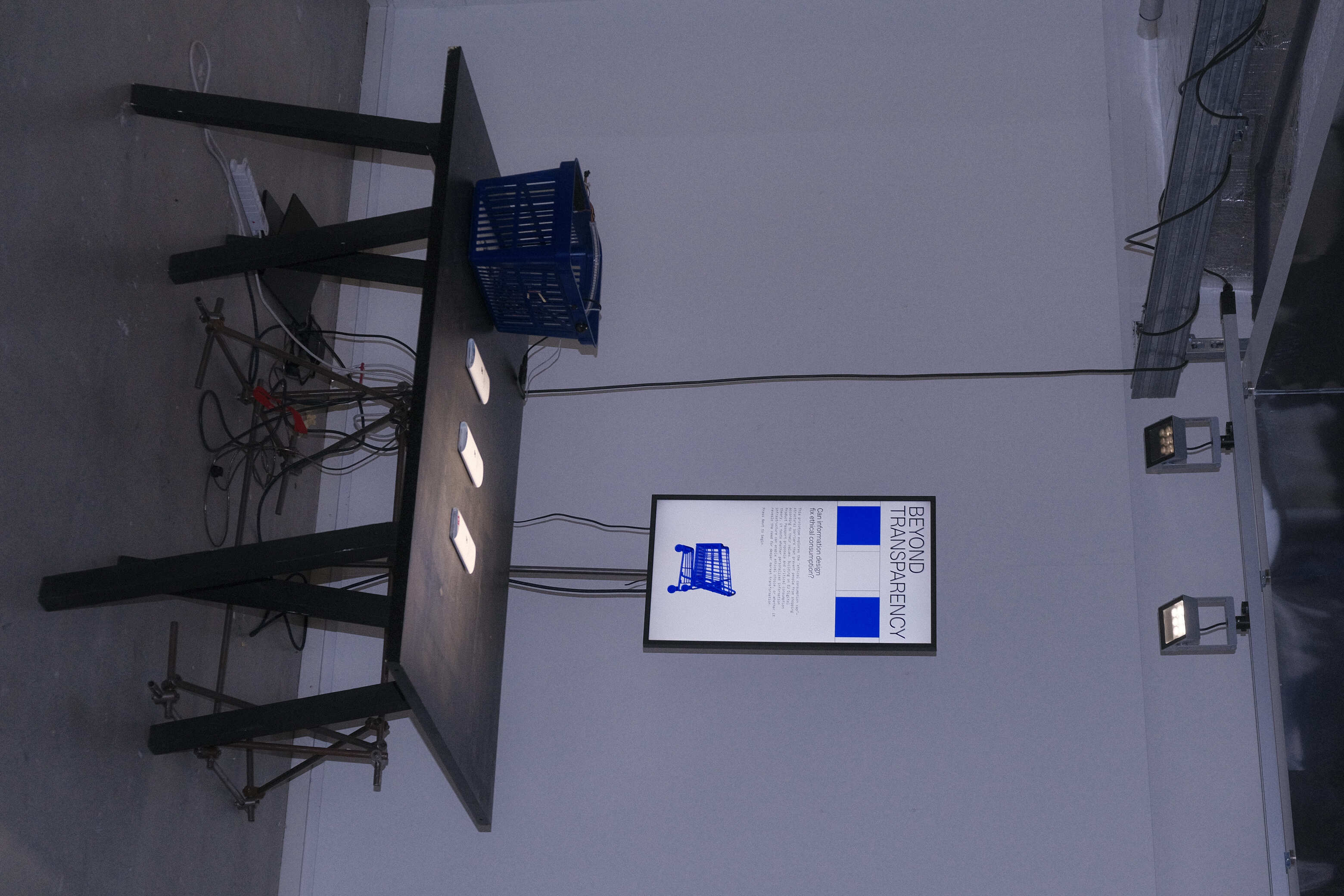
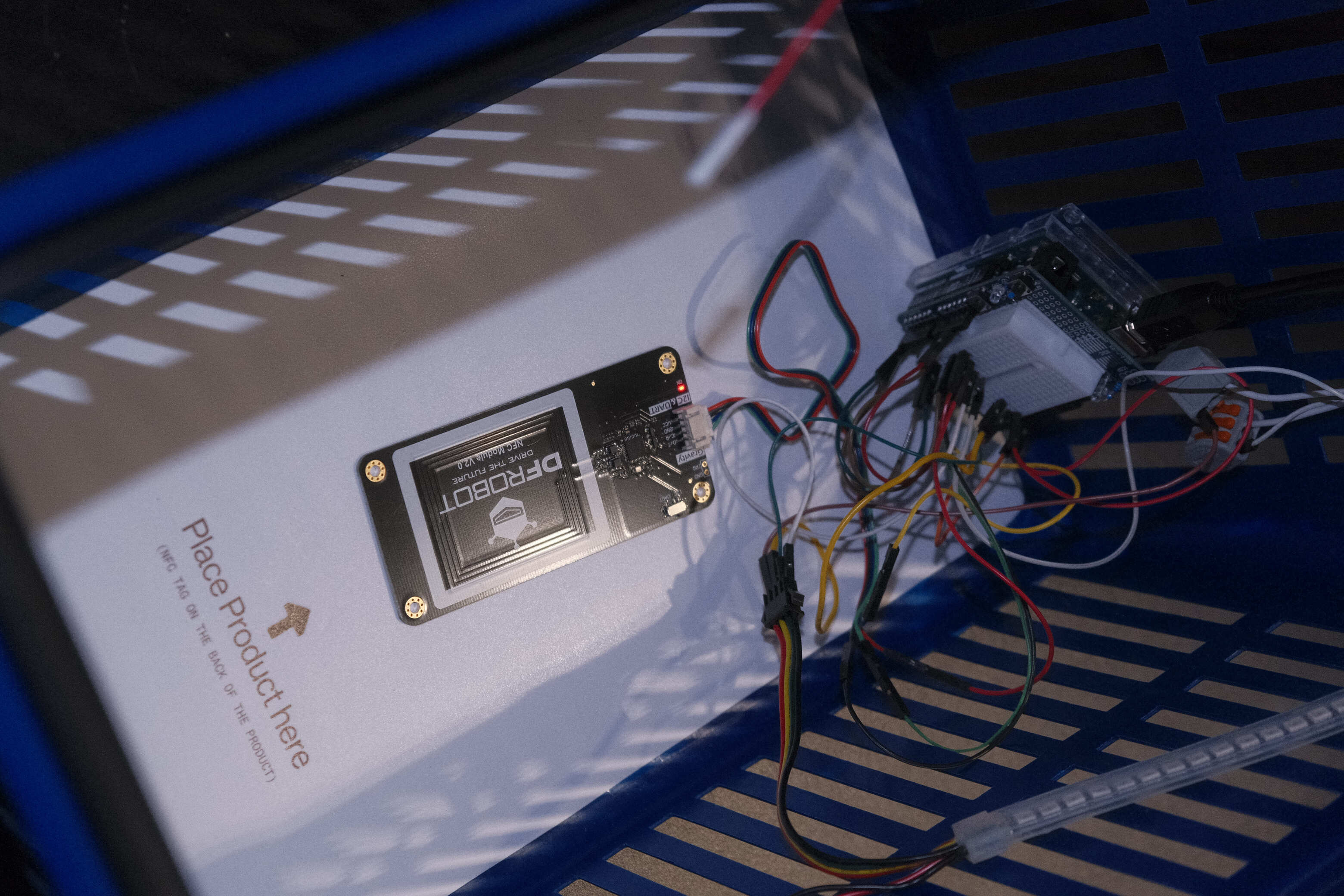
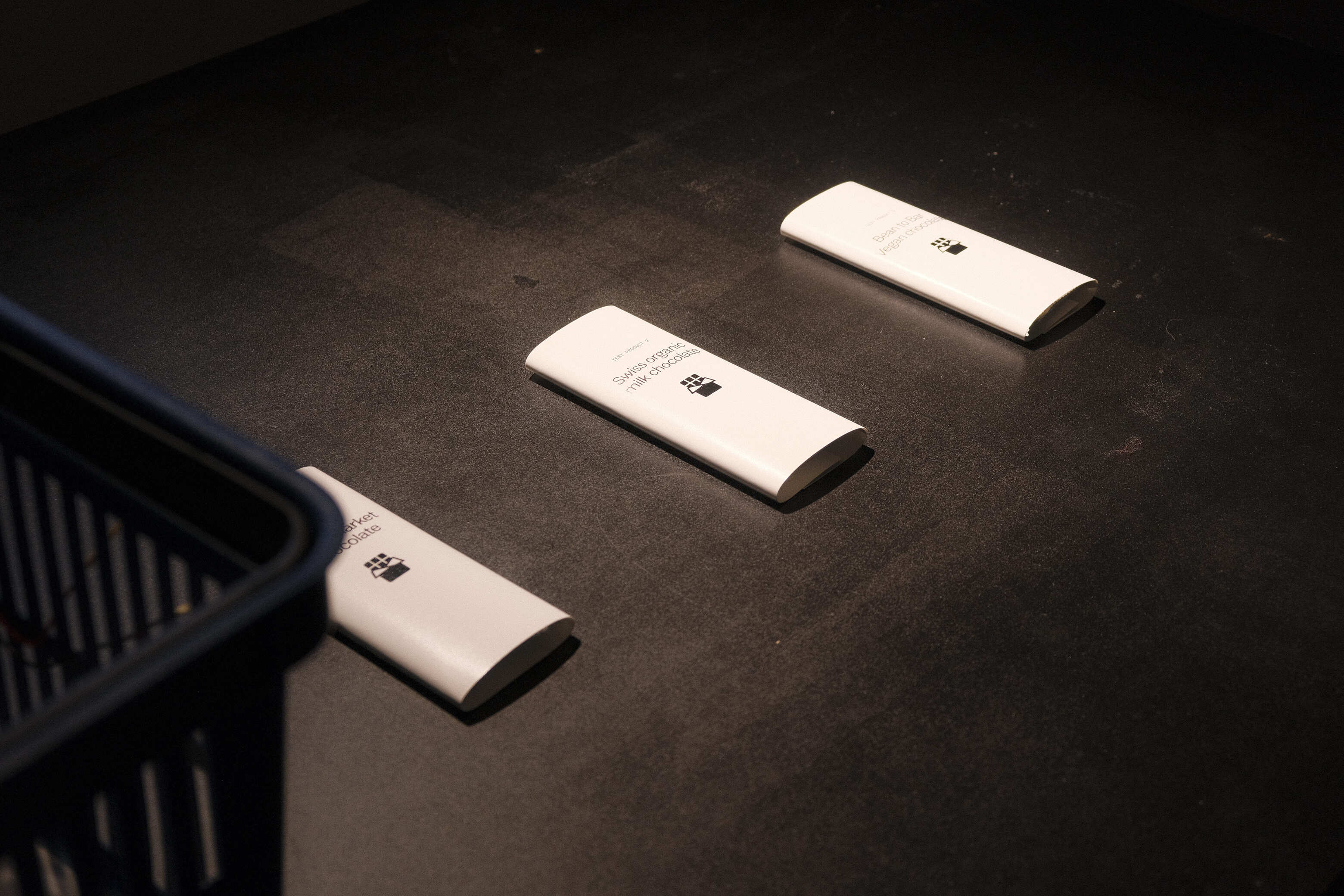
In the installation, visitors first define their ethical preferences across different categories. They then choose sample products and place them in a shopping basket equipped with sensors. Based on how well a product aligns with the selected criteria, the basket responds with immediate color feedback: red, yellow, or green. A screen also provides short explanations of why the product does or does not match the user’s preferences.
The project is partly inspired by initiatives such as the Digital Product Passport, but it also pushes beyond transparency as a design goal. Its central argument is that information is not enough if it remains abstract, generic, or detached from the moment of choice. Ethical information needs to be contextualized, connected to people’s own priorities, and presented in ways that are usable in everyday shopping situations.
At the same time, the prototype reflects critically on its own limits. Better information can support reflection and more informed decisions, but it does not remove the wider barriers people face: higher prices, limited ethical alternatives, and the broader economic structures that constrain consumer agency. In that sense, the project does not present information design as a complete solution, but as a way of making these tensions more visible.
For our initiative, Leon’s work is a valuable example of how responsible product search can move beyond online search interfaces alone. It brings the communication problem into a physical shopping setting and explores how ethical product information might become more immediate, legible, and actionable at the point of choice.
This project shows how responsible shopping can be explored not only as a question of transparency, but also as a question of context, communication, and agency.